01 / THE BIG PICTURE
Start with the essentials.
A chilled-water system distributes cooling through water pipes. A chiller removes heat from the returning water, pumps circulate the water and AHU or FCU coils transfer heat from the building air into that water.
02 / STEP BY STEP
How the system works.
- 01
Chilled water leaves the plant
Water cooled by the chiller circulates towards the building’s cooling coils.
- 02
Coils pick up room heat
Air passes over the coils. Heat moves from the air to the water, which returns warmer to the plant.
- 03
The chiller removes the heat
The refrigeration circuit transfers heat from the chilled-water side to the condenser side.
- 04
Heat leaves the system
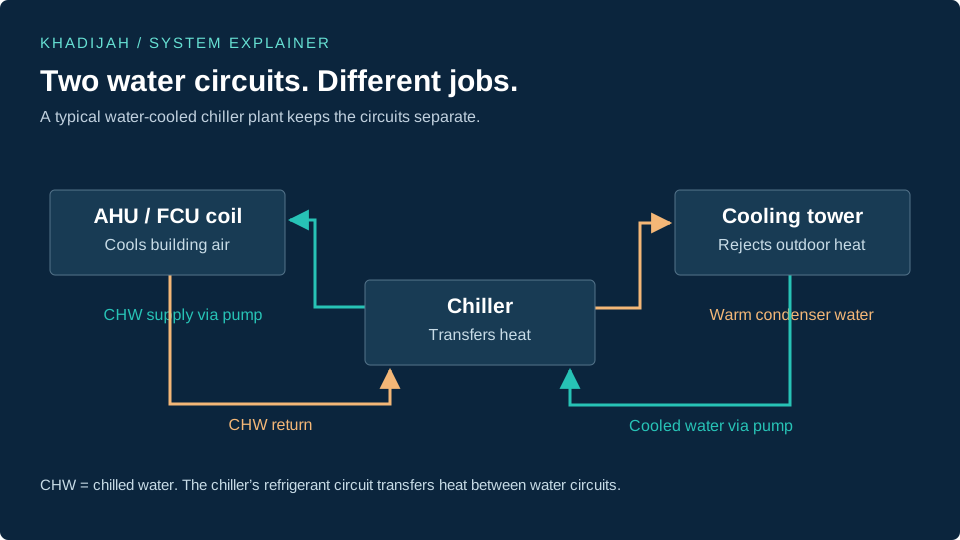
Air-cooled equipment rejects heat to outdoor air. A typical water-cooled plant uses condenser water and a cooling tower.
03 / LOOK A LITTLE CLOSER
The details that matter.
The chilled-water loop
This loop serves the building coils. Pumps, valves, strainers, expansion provisions and controls support circulation. Pipe insulation helps limit heat gain and condensation.
The condenser-water loop
In a typical water-cooled plant, a separate water circuit carries heat from the chiller condenser to the tower. It is not the same water circuit that serves room cooling coils.
Read the whole plant
Temperatures, flow, pressure, electrical observations and alarms are useful in context. A single reading does not confirm equipment performance or identify the fault by itself.
04 / AT A GLANCE
Keep these distinctions clear.
| Part of system | Role | What affects performance |
|---|---|---|
| Air-cooled chiller | Condenser transfers heat to air | Outdoor coil condition, airflow and ambient conditions. |
| Water-cooled chiller | Condenser transfers heat to water | Tower, condenser-water pumps, treatment and water-side condition. |
| Building distribution | Water carries cooling to coils | Flow, valves, air-side performance and insulation. |
THE KEY TAKEAWAY
A chiller that is running does not guarantee that every room is receiving enough cooling. The water and air distribution systems also need to work correctly.
05 / COMMON QUESTIONS
Good questions to ask.
Is cooling tower water sent to the room FCUs?
Not in the typical arrangement shown. The condenser-water and chilled-water circuits are separate.
What temperatures should every chiller run at?
There is no universal set of readings for all designs and conditions. Compare actual readings with the equipment and system design requirements.
Further reading
Carrier: chillersThis guide explains typical arrangements. Equipment selection, technical settings and repair procedures must follow the actual system design and manufacturer’s instructions.